Back to Help

Use Injection In Fields

Drive geometry and text fields from parameters and variables instead of fixed literals.

Geometry ControlintermediatePrompt-based

What this is

Injection allows a field to resolve from parameters and variables instead of fixed values.

Instead of typing literal values, you bind fields to logic.

This is how geometry and labels stay in sync with inputs.

Fields can evaluate:

  • Tokens -> {Control_Load}
  • Expressions -> =IF(Control_Load > 1000, 2, 1)
  • Text -> 'Load: {Control_Load} VA'
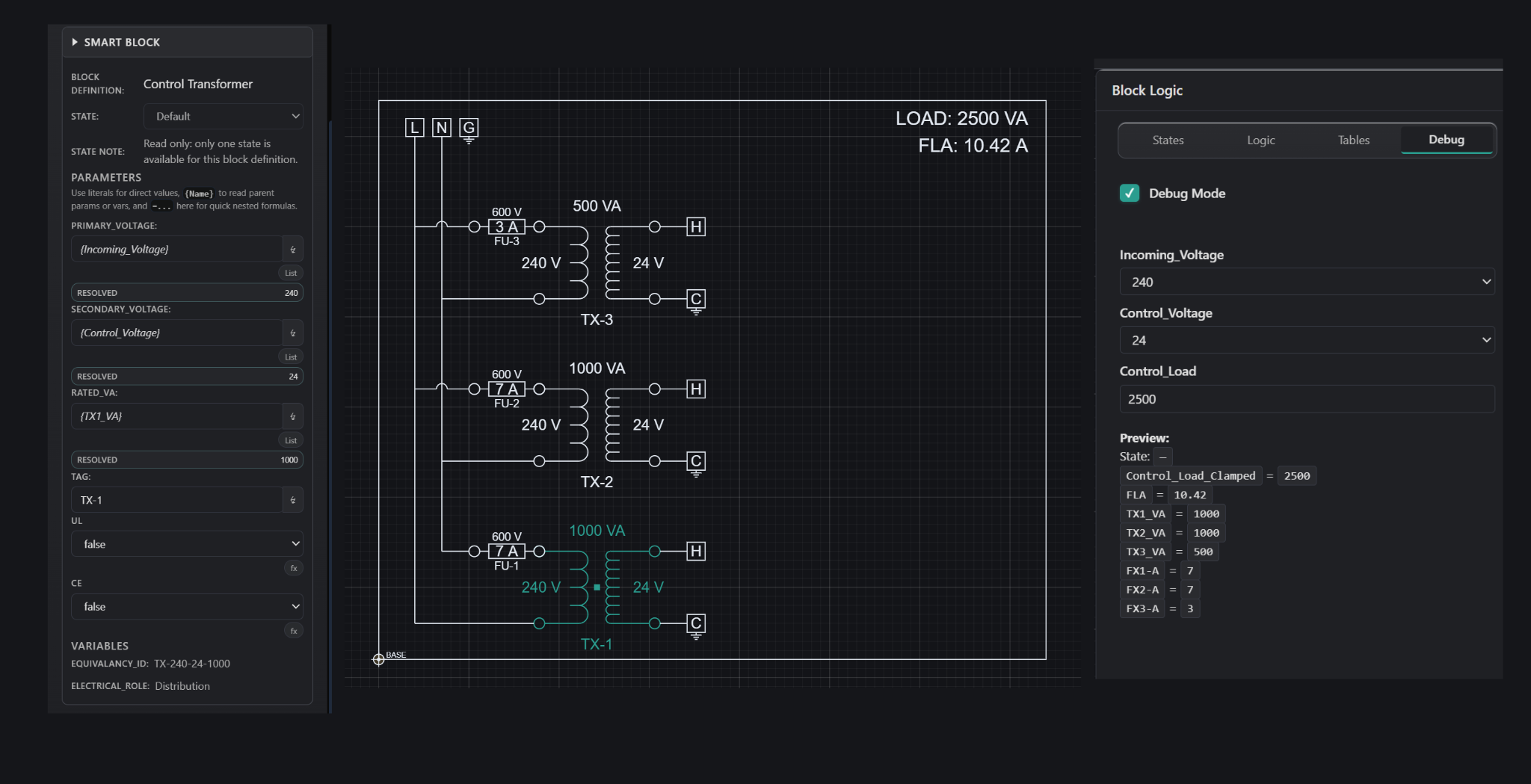
Properties Panel injection controls with resolved preview
Injection in the Properties Panel - the selected block shows injectable parameter fields on the left, the drawing updates in the center, and the debug preview on the right shows the computed values the system is using.

Why injection matters

Injection connects logic to geometry and text. Instead of manually editing drawings, you define how fields resolve from data.

This enables:

  • Geometry that updates automatically
  • Labels that stay consistent
  • Nested blocks that receive computed values

Injection is the bridge between logic and outputs.

How to enter injections

Injection is applied directly in the Properties Panel.

  • Type a token - use {Name} to reference parameters or variables
  • Enter an expression - start with = to compute values
  • Drag and drop - drag parameters or variables into fields
  • Use field controls - some fields provide dropdowns or helpers

A preview shows the resolved value so you can verify the result.

Injection types

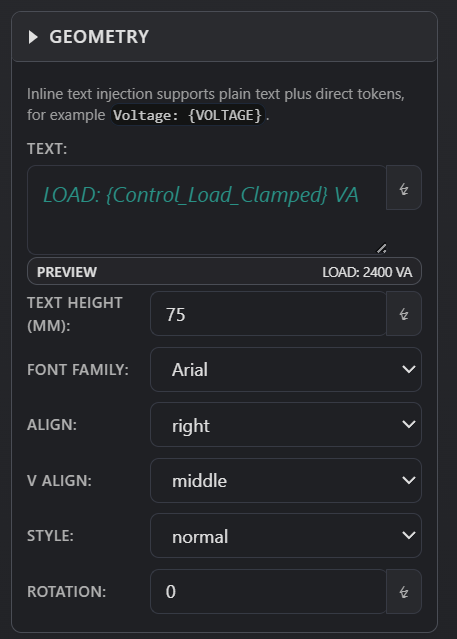
Text interpolation

Text fields can mix static text with dynamic values.

Example: LOAD: {Control_Load} VA

The text updates automatically as inputs change.
Text injection example in a text field
Text interpolation - embedding values inside labels.

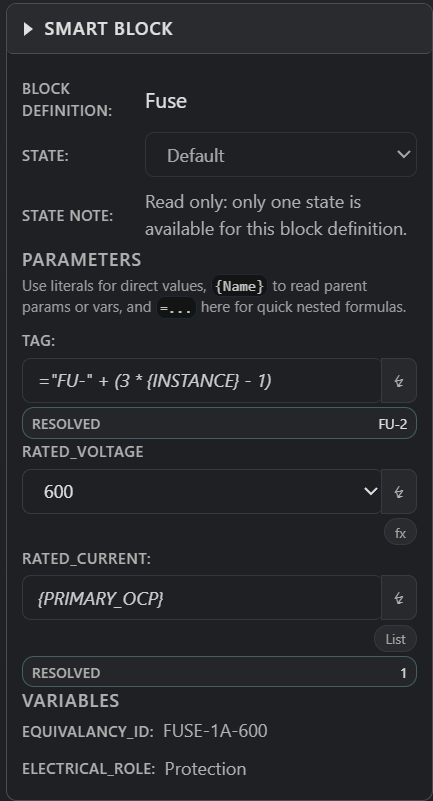
Formula injection

Fields can compute values using formulas.

Example: =IF(Control_Load > 1000, 2, 1)

This allows behavior to be defined directly at the field level.
Formula injection example in a field
Expressions - computing values directly inside a field.

Where it is

  • Properties Panel -> main injection interface
  • Geometry fields -> dimensions, transforms
  • Text fields -> labels and annotations
  • Nested block parameters -> pass computed values

What happens

  • Field receives input (literal, token, or expression)
  • Tokens resolve from current parameters and variables
  • Expressions evaluate using logic
  • Result becomes the field's value
  • Geometry, text, and nested blocks update

Reference link

For full syntax and supported functions, see the Reference page:

Docs

How injection participates in evaluated logic.